
Population Growth in Bismarck, North Dakota: A Historical Look (And Why It Matters for Housing)
By Rebecca Sabot, Real Estate Agent
© Rebecca Sabot. All rights reserved.
Quick takeaway
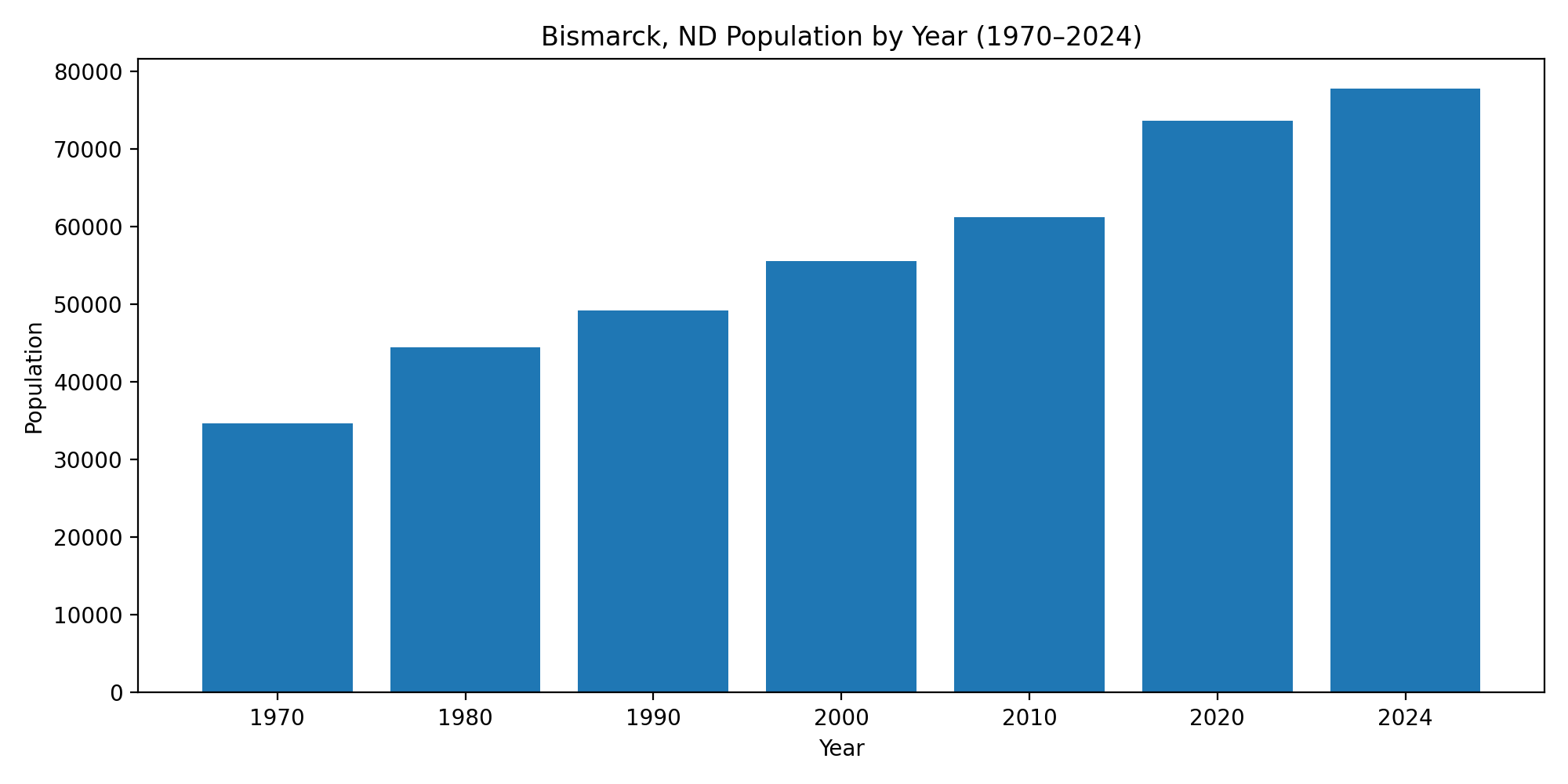
Bismarck isn’t just “steady.” It’s been meaningfully growing for decades, with a noticeable acceleration in the 2010s. The city counted 73,622 people in the 2020 Census and was estimated at 77,772 in 2024. Census.gov
And yes—population growth and the housing market are basically attached at the hip.
What changed in the 2010s?
From 2010 to 2020, Bismarck added 12,350 residents (+20.2%)—the biggest decade jump in the table. Census.gov
That kind of growth usually shows up in real life as:
tighter housing supply (especially “entry-level” homes)
more new construction and subdivision expansion
increased rental demand
rising pressure on infrastructure, schools, and commercial development
In other words: if you’ve felt Bismarck changing, you’re not imagining it.
What population growth means for the Bismarck housing market
Population growth doesn’t automatically mean prices skyrocket every year (markets are moody). But it does tend to create long-term “tailwinds” for housing demand.
1) Neighborhoods don’t grow evenly
Some areas attract new residents faster because of:
newer housing stock
commute patterns
school boundaries
proximity to retail, parks, and services
If you’re selling, the question isn’t just “What’s the market doing?”—it’s “What’s my micro-market doing?”
2) New construction impacts everyone’s pricing
When a city grows and builders deliver more inventory, it can:
raise “baseline” pricing for similar homes
shift buyer expectations (floorplans, finishes, layouts)
affect appraisals and competition in nearby resale neighborhoods
3) More people = more life transitions
Growth usually comes with more:
job relocations
first-time buyers
downsizers
investors looking at rentals
That means more buyer types, and your marketing should match the most likely pool (not a generic “3 bed 2 bath, call me” situation).
As a full time realtor, I track these local shifts constantly because they show up in real client decisions—pricing, timing, and which homes win attention fast. (Also, your house deserves better than guesswork and vibes.)
Conclusion: What Bismarck’s Growth Means for Your Next Move
Bismarck’s population story is simple: this is a city that keeps gaining momentum—from 34,703 residents in 1970 to an estimated 77,772 in 2024. That kind of long-term growth tends to shape everything from neighborhood development to buyer demand to what types of homes get built next.
But here’s the real-world truth: the “headline trend” doesn’t sell a house—strategy does. Population growth is helpful context, but your results come down to the specifics: your neighborhood, your home’s condition, the price bracket, and how well your listing is positioned against the competition (including new construction).
If you’re buying, selling, or just trying to time things smart in Bismarck, North Dakota, I’m happy to help you translate the big-picture growth into a plan that actually fits your goals—without guessing, and without the dramatic nonsense.
Rebecca Sabot, Real Estate Agent
701-415-2216
www.findNDhomes.com